Technology has become a natural part of a student’s everyday life. Children use smartphones, tablets, computers, smart televisions, applications and digital learning platforms almost effortlessly. They can search for information, watch videos, communicate online and quickly learn how to operate new devices. However, being comfortable with technology is very different from understanding how technology actually works.
Most modern technology is designed to make complicated processes feel simple. A student taps an icon and an application opens. They place a hand beneath an automatic dispenser and it responds. They walk towards an automatic door and it opens. The interaction may take only a second, but behind that simple action are sensors, electronic components, programming instructions and mechanical systems working together. Students usually experience only the final result, while the technology responsible for producing that result remains invisible.
This is why technology education should go beyond teaching students how to use digital tools. Students should also have opportunities to explore what happens behind those tools, understand how different systems work and eventually build technological solutions themselves. The objective is to gradually move students from being consumers of technology towards becoming creators of technology.
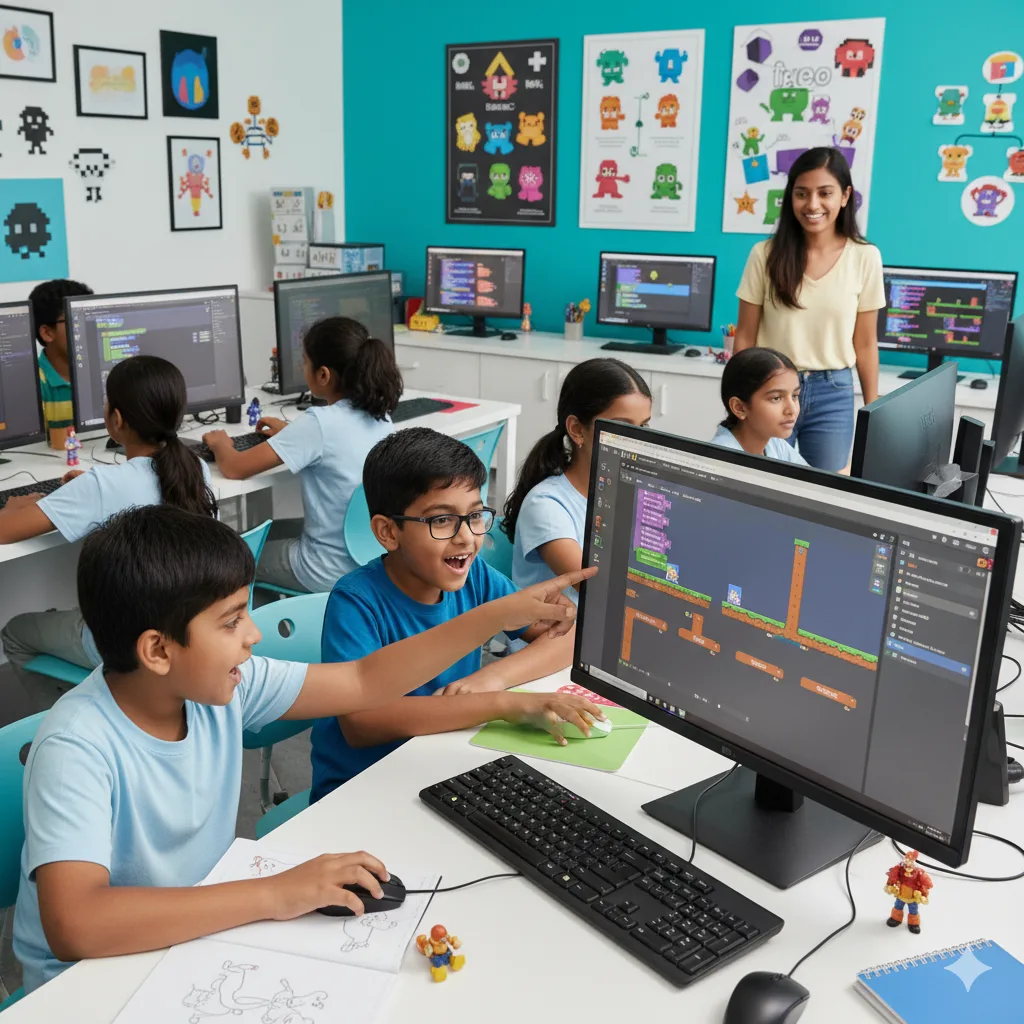
Consider something as ordinary as an automatic door. A student may walk through one every day without thinking about what makes it open. But ask the question, “How does the door know someone is standing there?” and an everyday experience immediately becomes a learning opportunity. The student begins thinking about sensors, detection, programming, motors and movement. One simple question can transform technology from something that is merely used into something that can be investigated.
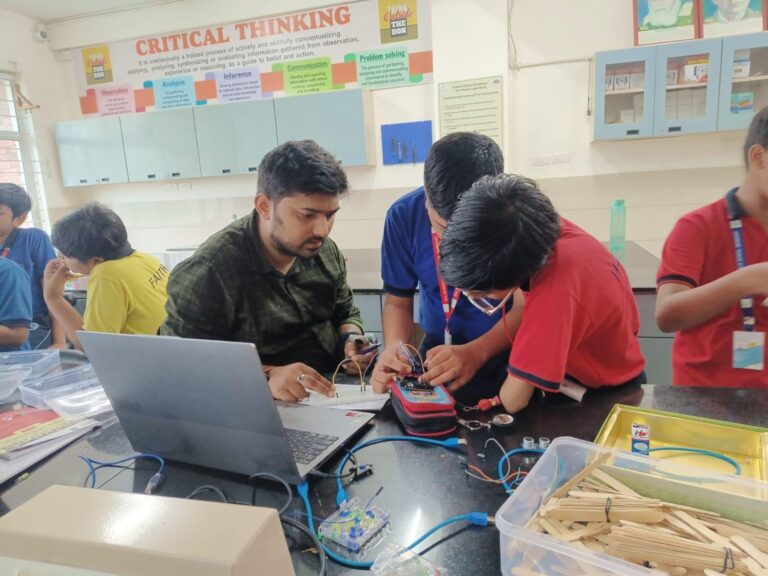
The same principle applies when students build projects themselves. Give a student a finished robot and the student can learn how to operate it. Give the student the components and the challenge of building that robot, and the learning experience becomes completely different. Now the student has to think about how the robot will move, what information it needs, which components should be connected and what instructions need to be programmed.
A simple smart dustbin provides a good example. To the person using it, the interaction is straightforward. Bring a hand close to the dustbin and the lid opens automatically. But when students build the system, they discover the process behind that simple action. An ultrasonic sensor measures distance and sends information to a controller. The program checks whether an object is close enough. If the programmed condition is satisfied, the controller sends an instruction to a servo motor and the lid opens.
Through a project like this, students begin understanding an important principle behind many smart machines: they first sense something, then process information and finally perform an action. The student is no longer simply observing what the machine does. The student begins understanding why the machine behaves in a particular way.
Hands-on technology projects also help students understand how different academic subjects connect with one another. Consider an automatic plant-watering system. Students may need scientific knowledge to understand plants and soil moisture. They use mathematics while working with measurements and data. They explore technology through sensors and controllers, apply engineering while designing the watering mechanism and use coding to determine when the system should respond.
The subjects that may appear separate in a conventional timetable suddenly become connected through one real-world problem. This is one of the important strengths of STEM and project-based learning. Instead of studying concepts only in isolation, students discover how different areas of knowledge can work together to create a practical solution.
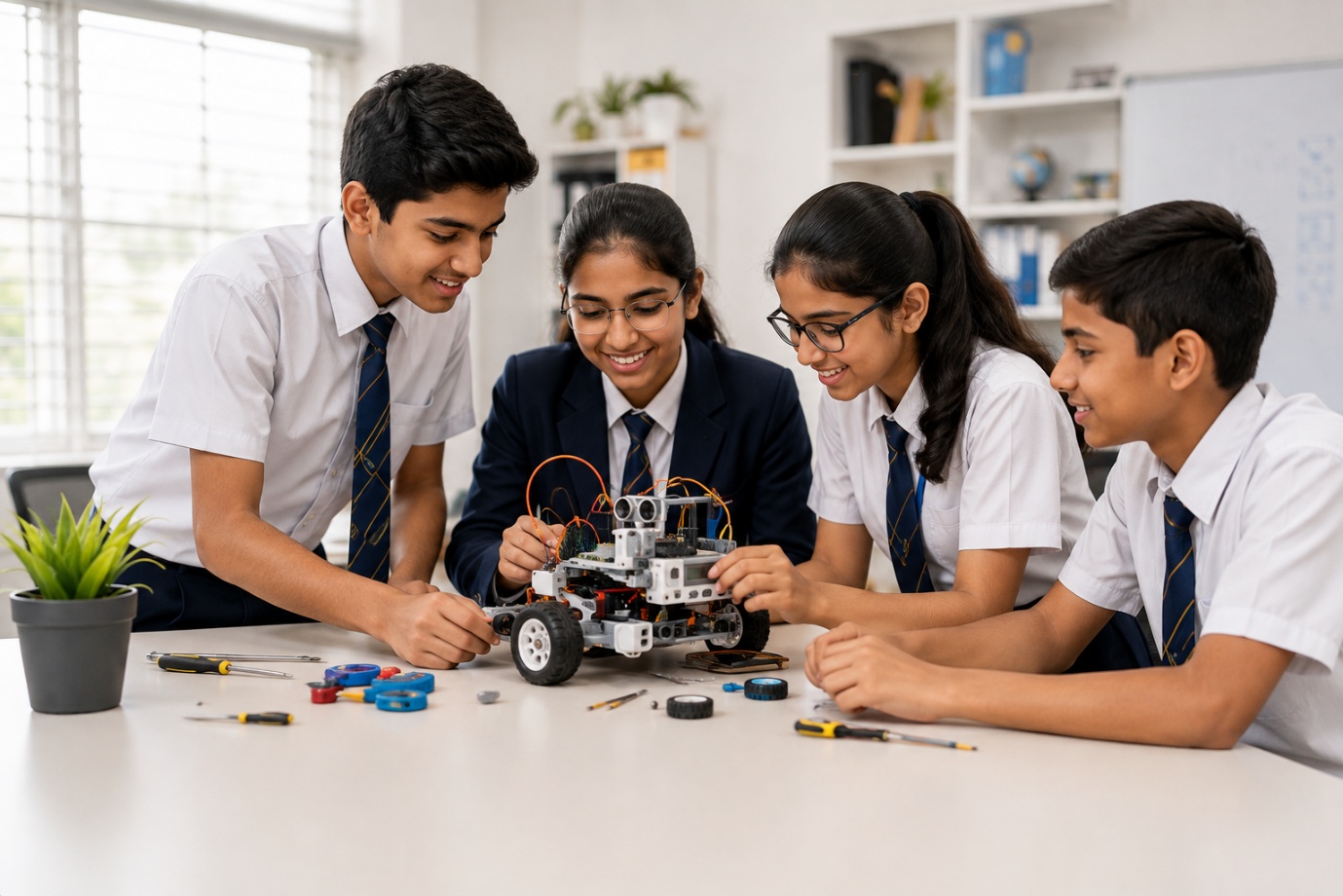
Another important part of building technology appears when the project does not work as expected. Imagine students programming a robotic car that is supposed to move forward and then turn right. They assemble the components, complete the program and press RUN. Instead of turning right, the car turns left.
That unexpected result creates an opportunity to investigate. Students need to determine whether the problem is in the program, the motor connections, the sequence of instructions or another part of the system. They make a change and test the robot again. If it still does not work correctly, they investigate further. Through this process, students learn to build, test, observe, adjust and test again.
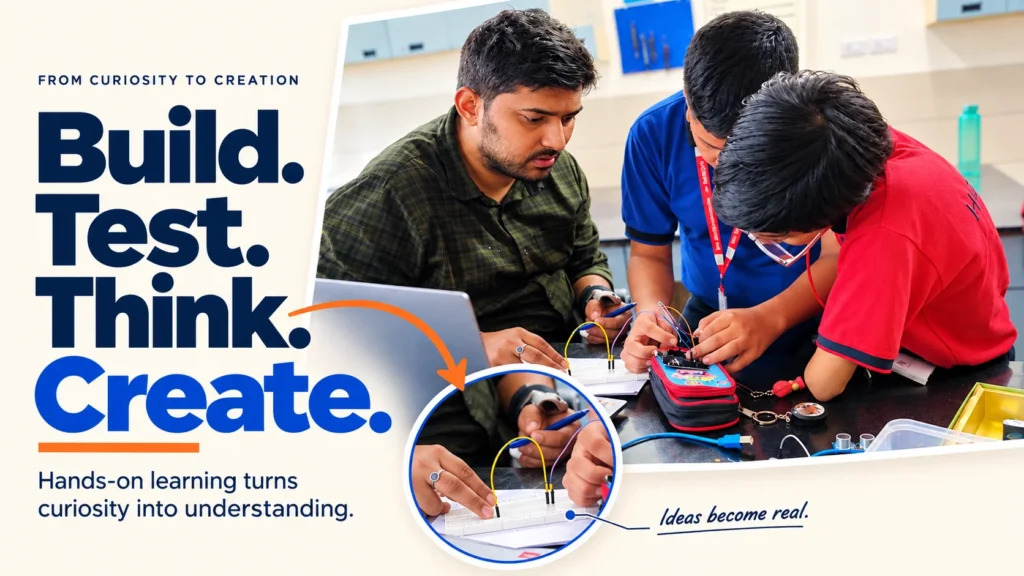
The important lesson is that an unsuccessful attempt does not necessarily mean the project has failed. Instead, it provides information that can help students understand what needs to change. In programming, this process is commonly associated with debugging. In engineering, testing and iteration are fundamental parts of developing solutions. For students, it becomes practical experience in structured problem-solving.
Building technology also encourages students to move beyond simply following instructions. When students first encounter a new component or concept, step-by-step guidance can be useful. However, meaningful learning should gradually give students more responsibility for making decisions.
Suppose students are challenged to create an obstacle-avoiding robot. They need to decide how close an obstacle should be before the robot responds, whether the robot should stop or turn immediately, which direction it should choose and what should happen when another obstacle appears. Different groups may develop different solutions to the same challenge.
This is an important transition because students begin moving away from always asking, “What is the correct answer?” Instead, they start thinking, “What solution can we create?” That change encourages experimentation and creativity while helping students understand that many real-world problems can have more than one possible solution.
The benefits of building technology are also much broader than learning coding, electronics or robotics. Students working together on a project have to discuss ideas, divide responsibilities, explain their decisions and solve problems as a team. They may need to present their project, explain how it works and describe the difficulties they encountered while building it.
Through these experiences, students can develop problem-solving, logical thinking, collaboration, communication, creativity and persistence alongside technical knowledge. Not every student who learns robotics needs to become a robotics engineer, and not every student who learns coding needs to become a programmer. The larger educational value lies in the thinking habits students develop while creating something.
Hands-on experience can also change the way students look at technology outside the classroom. A traffic signal is no longer simply three coloured lights. It becomes a programmed system following a sequence. An automatic light becomes a combination of sensing, decision-making and output. A refrigerator can become an example of temperature control, heat transfer and mechanical engineering. A washing machine can be understood as a combination of programming, motors, sensors and mechanical systems.
When students begin recognising these systems in everyday life, technology becomes something they can question and explore rather than simply accept. Instead of asking only, “How do I use this?” they begin asking, “How does this work?” That curiosity can eventually lead to an even more important question: “Can I build something like this?”
For schools, this means technology education should not be measured simply by how many computers, tablets or smart boards are available. Having more technology does not automatically create deeper technological understanding. What matters is what students are encouraged to do with it.
Students should have opportunities to design, build, program, experiment, troubleshoot and improve. Robotics labs, coding programmes, tinkering spaces and hands-on STEM activities can support this process when they are designed around learning rather than simply around equipment.
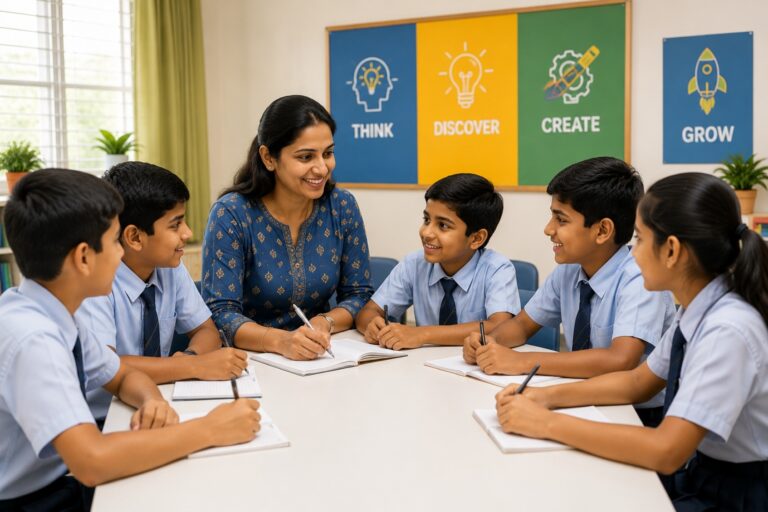
Teachers also play an important role in this environment. Instead of immediately correcting every mistake, teachers can guide students through questions. What did you expect to happen? What actually happened? Why might the result be different? What could you change? What should you test next? This approach encourages students to investigate problems and gradually become more independent thinkers.
At TinkerScape Educational Hub, this is an important part of how we approach robotics, coding and hands-on STEM learning. A student project should not simply be a model that works during a classroom demonstration. Students should understand what they have built, why it works, what problems they encountered and how they could improve it further.
The technologies students use in the future will continue to change. Some of the devices and platforms they will eventually work with may not even exist today. For that reason, teaching students only how to operate current technology is not enough. Education should also help them develop the confidence to explore unfamiliar systems, understand how things work, break problems into smaller parts and create solutions of their own.
The real achievement, therefore, is not simply that a student successfully builds a robot, smart dustbin or automated system. It is the transformation that happens in the student’s thinking. A child who once looked at technology and asked, “How do I use it?” begins asking, “How does it work?” And with the right learning opportunities, that question can eventually become, “What can I build?”
That is the shift from being a consumer of technology to becoming a creator of technology, and it is one of the most valuable opportunities hands-on education can give students.