“The future does not belong to the schools with the most technology. It belongs to the schools that prepare students to think, create and solve problems confidently.”
Education is changing faster than ever before.
Artificial Intelligence is transforming industries, automation is reshaping careers, and the skills employers seek today are significantly different from those required just a decade ago.
In this rapidly evolving world, schools are facing one important question:
Are we preparing students for examinations, or are we preparing them for life?
A future-ready school recognises that academic excellence remains important, but it is no longer enough on its own.
Students need opportunities to collaborate, innovate, communicate effectively, adapt to change and solve real-world problems. These capabilities cannot be developed through textbooks alone.
Instead, they require learning environments where curiosity is encouraged, creativity is celebrated and technology becomes a tool for meaningful learning rather than simply a classroom accessory.
This is where the concept of a future-ready school becomes truly significant.
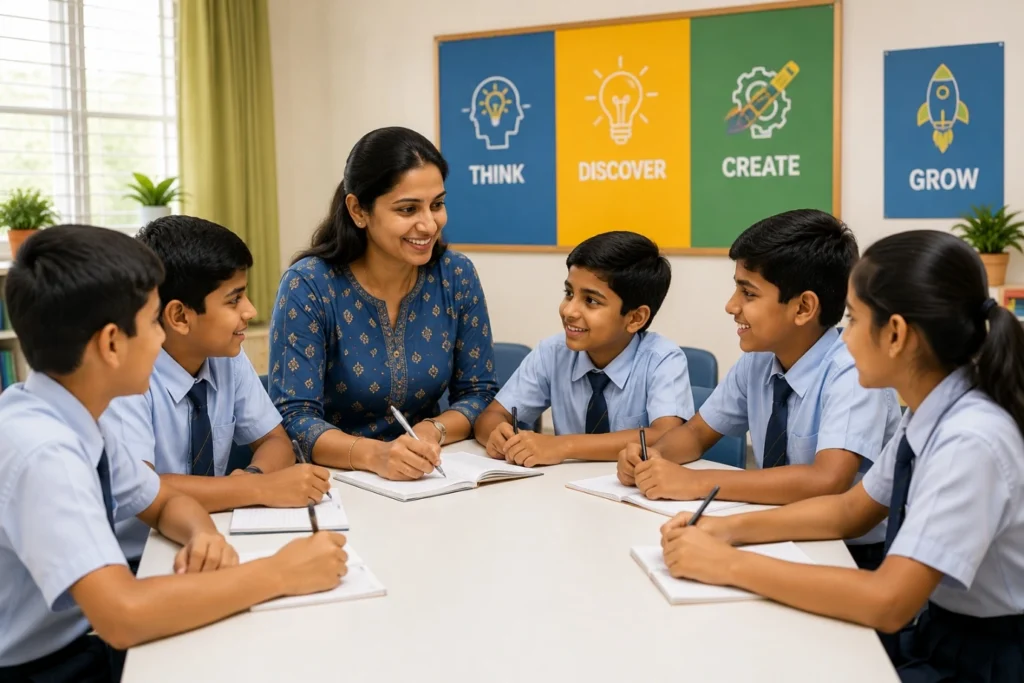
What Is a Future-Ready School?
A future-ready school is an institution that prepares students not only for academic success but also for the rapidly changing demands of higher education, modern careers and society.
Such schools focus on developing:
- Critical thinking
- Creativity
- Collaboration
- Communication
- Digital literacy
- Problem-solving
- Leadership
- Adaptability
- Innovation
Rather than asking students to memorise information, future-ready schools encourage them to investigate, experiment and create.
Students become active learners instead of passive recipients of knowledge.
Why Traditional Learning Alone Is No Longer Enough
For generations, education has centred around textbooks, lectures and examinations.
While these remain important, they cannot independently prepare students for a future driven by:
- Artificial Intelligence
- Automation
- Robotics
- Data Science
- Smart Manufacturing
- Design Thinking
- Entrepreneurship
Today’s students will enter professions that may not even exist today.
Consequently, schools must focus less on teaching fixed answers and more on developing flexible thinkers.
The Skills Every Future-Ready School Develops
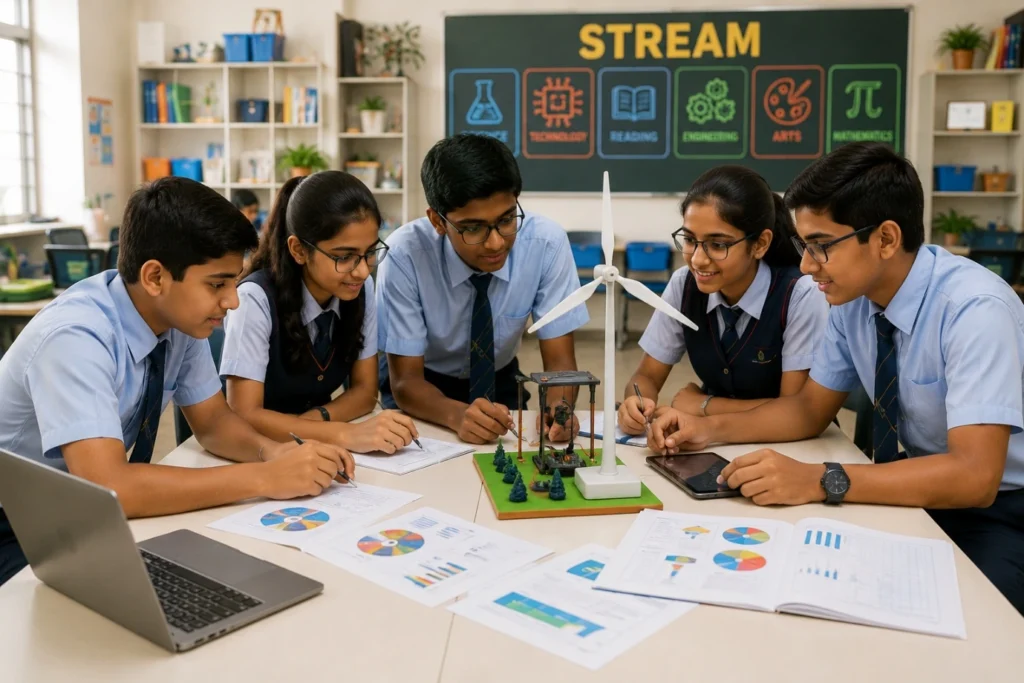
1. Critical Thinking
Students learn how to analyse situations, evaluate evidence and make informed decisions.
Instead of memorising solutions, they understand how to create solutions.
Activities include:
- Robotics challenges
- Engineering design
- STEM projects
- Scientific investigations
2. Creativity and Innovation
Creativity is no longer limited to art.
It drives innovation in engineering, medicine, technology and business.
Future-ready classrooms encourage students to:
- Build prototypes
- Design products
- Solve community problems
- Think differently
Innovation begins with imagination.
3. Collaboration
Modern workplaces demand teamwork.
Students therefore need opportunities to:
- Work in groups
- Share ideas
- Divide responsibilities
- Present collective solutions
Project-based learning naturally develops these abilities.
4. Communication Skills
Ideas have little value unless they can be communicated effectively.
Future-ready schools help students improve:
- Public speaking
- Presentation skills
- Technical communication
- Visual storytelling
- Collaborative discussions
Confidence grows through practice.
5. Digital Literacy
Technology is now integrated into nearly every profession.
Students should understand:
- Responsible digital citizenship
- Coding fundamentals
- Artificial Intelligence awareness
- Data interpretation
- Online collaboration
- Cyber safety
Digital literacy is becoming as fundamental as reading and mathematics.
Why STREAM Education Is Transforming Schools
One of the defining characteristics of future-ready schools is the adoption of STREAM education.
STREAM integrates:
- Science
- Technology
- Reading & Research
- Engineering
- Arts
- Mathematics
Instead of teaching these disciplines separately, STREAM encourages interdisciplinary learning through real-world challenges.
For example, students designing a smart irrigation system may apply scientific principles, engineering concepts, mathematical calculations, coding skills and creative problem-solving within a single project.
This integrated approach makes learning more meaningful and memorable.
The Role of Robotics and Coding
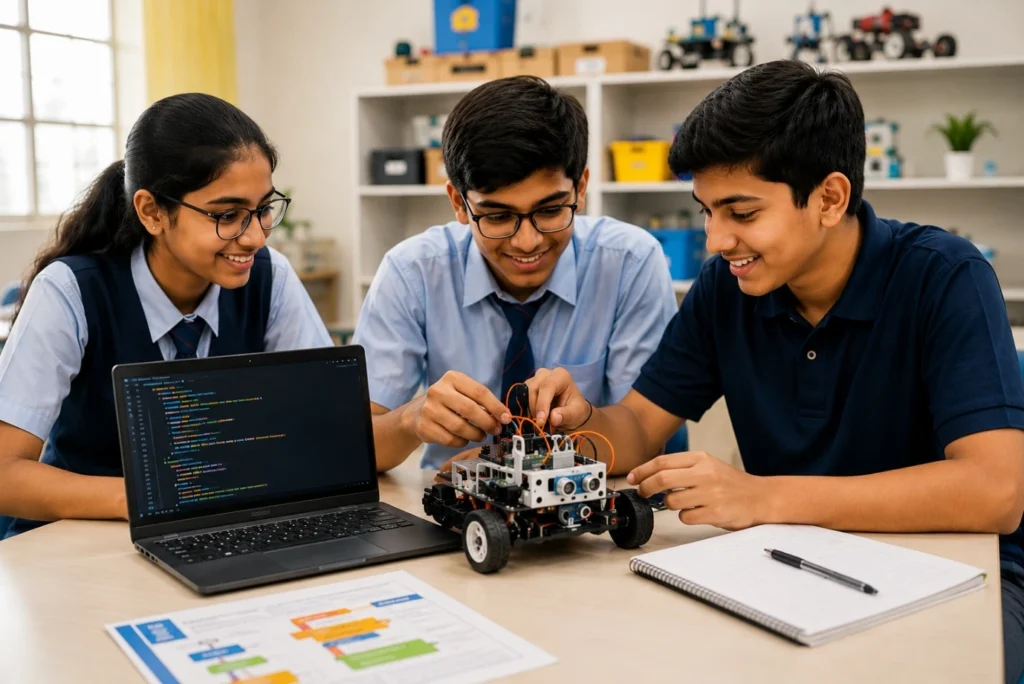
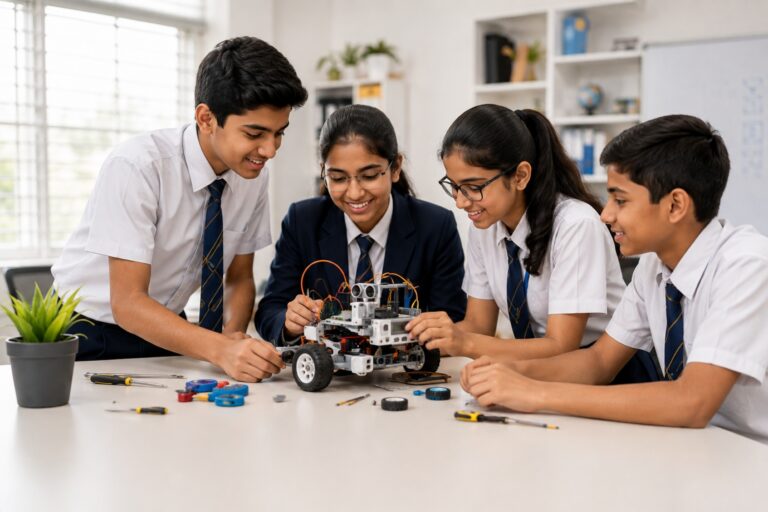
Robotics is not simply about building machines.
It helps students understand:
- Logical thinking
- Engineering concepts
- Programming
- Teamwork
- Testing and improvement
Similarly, coding teaches students to break complex problems into manageable steps.
These experiences develop persistence and analytical thinking—qualities valuable across every profession.
Experiential Learning Creates Lasting Understanding
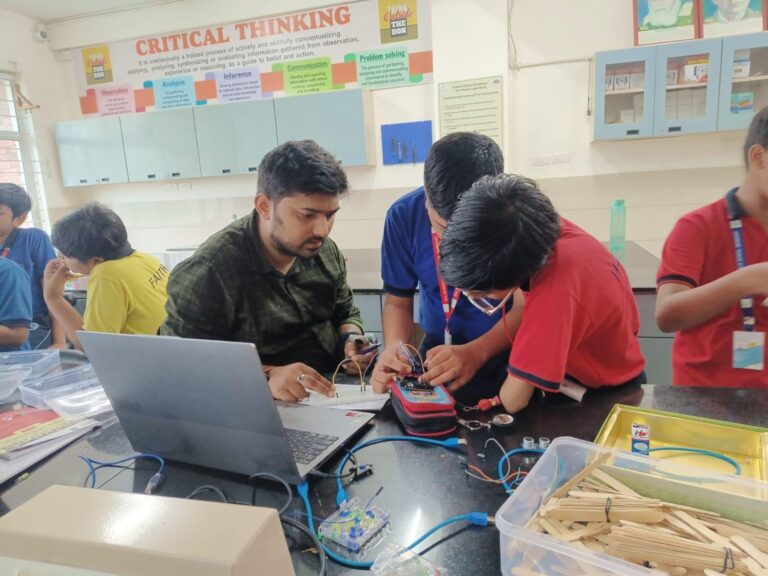
Research consistently shows that students retain knowledge more effectively when they experience concepts firsthand.
Hands-on activities:
- Increase curiosity
- Improve retention
- Build confidence
- Encourage experimentation
- Develop resilience
When students build, test, fail and improve, learning becomes authentic.
Project-Based Learning Bridges Theory and Practice
Future-ready schools increasingly adopt project-based learning because it mirrors real-world problem-solving.
Students may:
- Design assistive devices
- Develop mobile applications
- Build robots
- Create sustainable solutions
- Conduct scientific investigations
These projects encourage ownership of learning while developing transferable skills.
Teachers Remain the Foundation
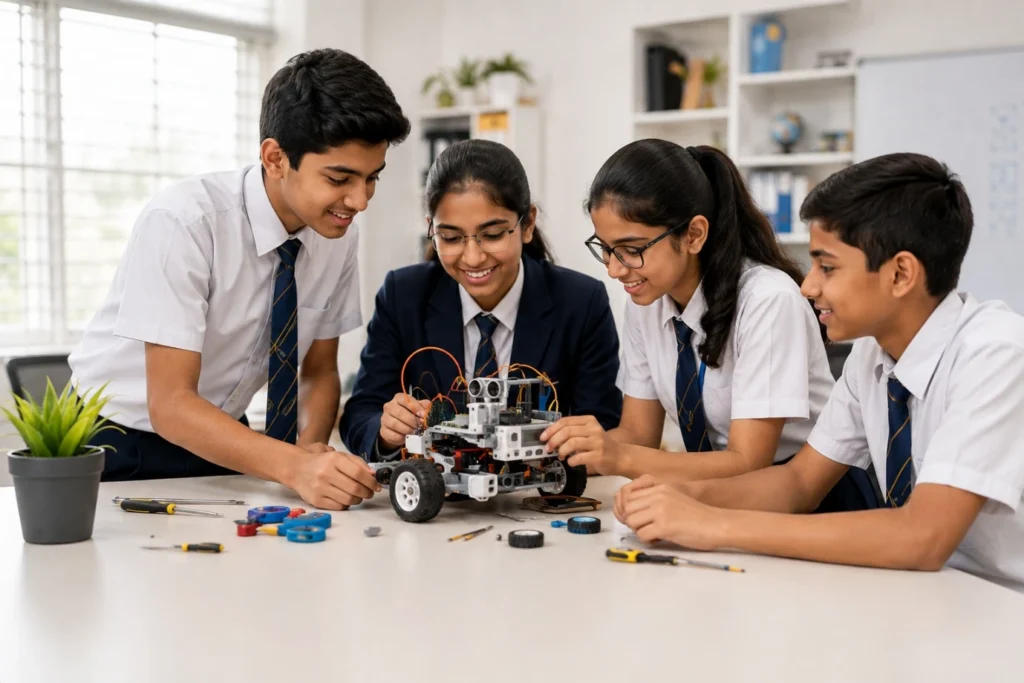
Technology alone cannot transform education.
Teachers remain the most influential factor.
Future-ready educators:
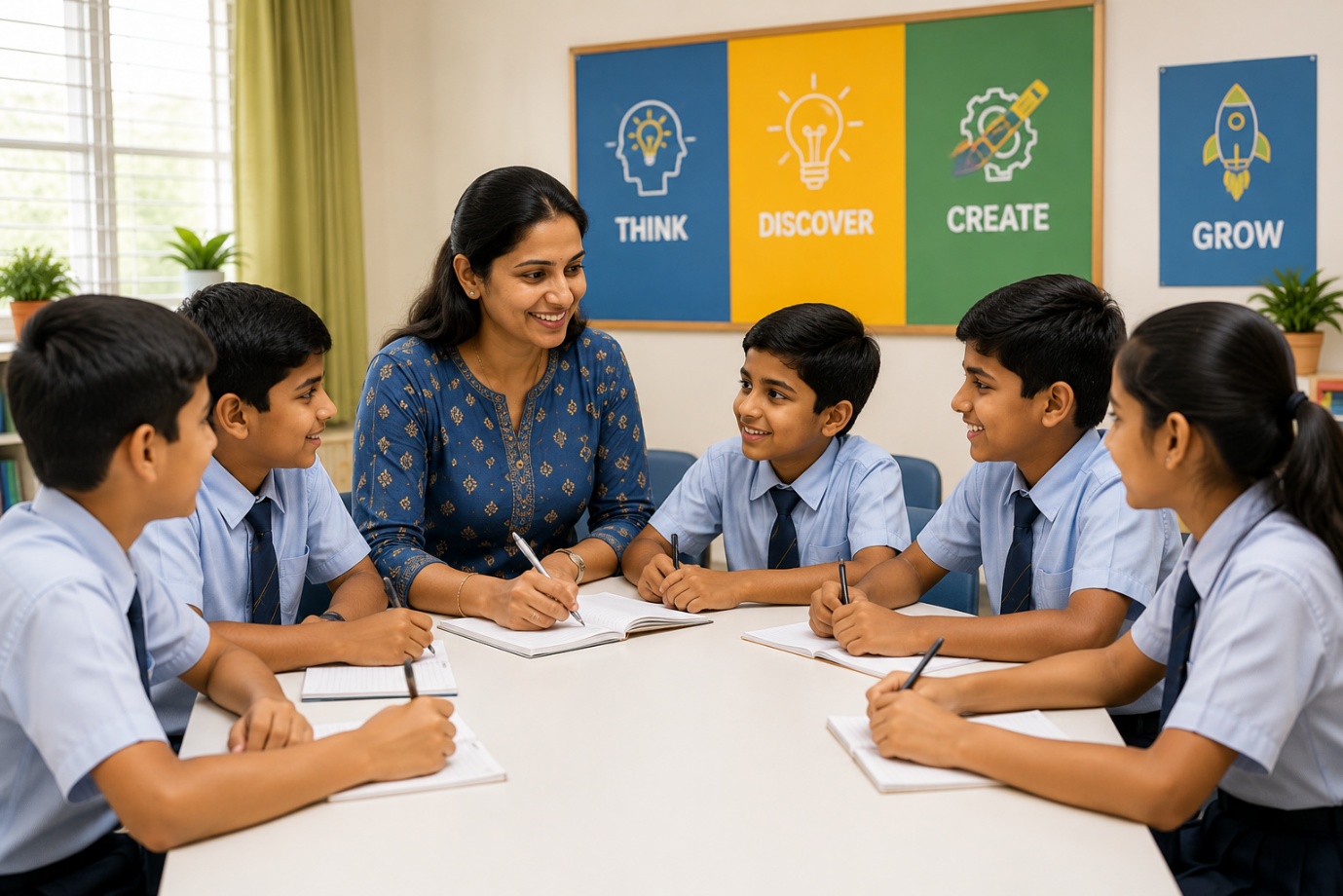
- Facilitate learning
- Encourage curiosity
- Guide exploration
- Support innovation
- Adapt teaching methods
Continuous professional development ensures teachers remain confident in integrating modern technologies into classrooms.
Creating an Innovation Culture
Innovation is not achieved through isolated workshops.
It requires a school-wide culture that values:
- Curiosity
- Experimentation
- Reflection
- Collaboration
- Continuous improvement
When students feel safe to ask questions and learn from mistakes, innovation naturally flourishes.
Aligning With NEP 2020
India’s National Education Policy 2020 strongly supports:
- Experiential learning
- Competency-based education
- Skill development
- Critical thinking
- Multidisciplinary learning
- Technology integration
Future-ready schools naturally align with these principles by providing meaningful, student-centred learning experiences.
Benefits for Students
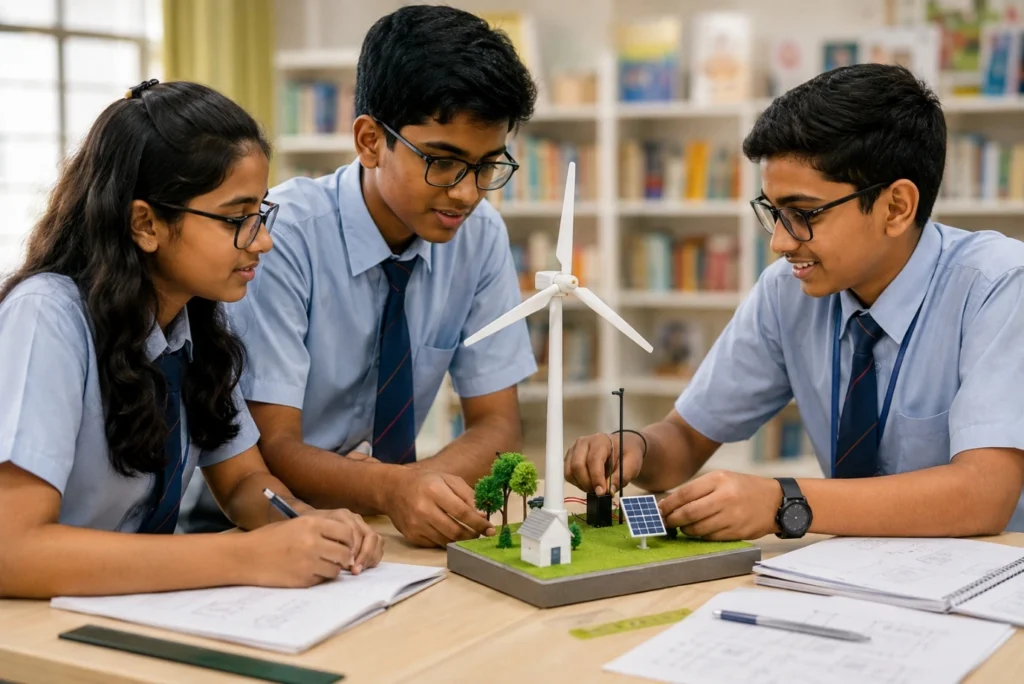
Students graduating from future-ready schools are more likely to develop:
- Higher confidence
- Stronger communication
- Better collaboration
- Improved creativity
- Enhanced problem-solving
- Leadership abilities
- Digital fluency
- Entrepreneurial thinking
- Adaptability
These qualities support success in higher education and professional careers.
Benefits for Schools
Schools that embrace future-ready education often experience:
- Stronger institutional reputation
- Increased parent confidence
- Better student engagement
- Higher retention
- Meaningful industry collaborations
- Enhanced learning outcomes
Rather than simply offering technology, they become recognised for delivering meaningful educational experiences.
Common Myths About Future-Ready Education
Myth 1: It requires expensive technology.
Reality: Effective learning depends more on pedagogy than hardware.
Myth 2: Robotics is only for senior students.
Reality: Age-appropriate robotics can begin from primary grades.
Myth 3: Coding replaces traditional subjects.
Reality: Coding complements mathematics, science and logical reasoning.
Myth 4: Future-ready education reduces academic performance.
Reality: Students often demonstrate stronger engagement and deeper conceptual understanding.
How Schools Can Begin Their Journey
Schools can take practical steps by:
- Evaluating current teaching practices.
- Introducing project-based learning.
- Training educators.
- Integrating STREAM activities.
- Encouraging innovation clubs.
- Building industry partnerships.
- Creating opportunities for exhibitions and competitions.
- Continuously reviewing learning outcomes.
Transformation happens progressively—not overnight.
Why TinkerScape Educational Hub
At TinkerScape Educational Hub, we believe future-ready education is about building confident learners rather than simply introducing technology into classrooms.
Our programs combine:
- STREAM education
- Robotics
- Coding
- Artificial Intelligence
- Hands-on learning
- Teacher training
- Innovation workshops
- School partnerships
Together, these initiatives help schools create engaging, meaningful and future-focused learning environments.
Concluding thoughts
It is defined by the learners it develops.
A future-ready school is not defined by the number of smart boards it installs or the devices it purchases.
When schools nurture curiosity, encourage experimentation and equip students with future skills, they prepare young minds not just to adapt to change—but to lead it.
The classrooms we build today will shape the innovators, leaders and problem-solvers of tomorrow.
The future of education begins with the decisions schools make today.
Frequently Asked Questions
- What is a future-ready school?
A future-ready school prepares students with academic knowledge alongside critical thinking, creativity, digital literacy, collaboration and problem-solving skills required for the future. - Why is STREAM education important?
STREAM education integrates multiple disciplines into practical learning experiences that improve innovation, engagement and real-world understanding. - How does robotics benefit students?
Robotics develops logical thinking, engineering concepts, teamwork, coding skills and resilience through hands-on problem-solving. - Is coding necessary for every student?
Coding teaches computational thinking and structured problem-solving, making it valuable for students regardless of their future career choices. - How does project-based learning improve education?
Project-based learning helps students apply classroom concepts to real-life situations, improving retention, confidence and creativity. - Can traditional schools become future-ready?
Yes. Schools can gradually adopt experiential learning, teacher training, STREAM education and project-based methodologies without completely changing their existing curriculum.